
The name Seend is thought to come from the old English word for sand — fitting, given that our village sits on a ridge of greensand rising above the marshy land to the north and south. That sandy ridge clearly appealed to early settlers, and by soon after the Norman Conquest there was already a village here, complete with a church, tucked within the royal hunting forest of Melksham. Around 1200, the King granted the living to the Dean and Chapter of Salisbury Cathedral, who still appoint our vicar today, even though the old tithes have long since disappeared.
By the 15th and 16th centuries, Seend was thriving thanks to the Wiltshire wool trade. When the church was rebuilt and enlarged in the late 1400s, a prosperous clothier, John Stokes, paid for the North aisle. His memorial brass is still there, and if you look up, you’ll spot the clothier’s shears in the window tracery.
In the 1660s, the writer and antiquary John Aubrey stayed with the Somner family, another clothier household. He discovered mineral springs in Seend and tried to promote the village as a spa — a plan he claimed was thwarted by jealous doctors from Bath.
The 18th century brought change. As the wool trade declined, Seend found new life thanks to the Turnpike road built in 1750 between Devizes and Trowbridge — then one of the main routes from London to Bath. Coaches and trade bustled along Seend Street until the railway arrived in the mid‑1800s.
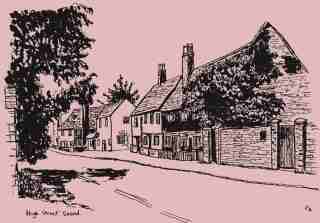
During this period, large landowners such as the Seymours (Dukes of Somerset), Awdrys, Bruges and Lockes acquired much of the land. Open‑field farming faded away, and the gentry built handsome houses along the ridge, taking advantage of the fresh air and wide views. Many of these homes still give Seend Street its distinctive charm.
As the old Royal Forest was gradually opened up and finally disafforested around 1620, settlements grew in Seend Cleeve, Seend Head, Sells Green and Seend Stocks — the latter a staging post on the Turnpike road — all of which became part of the wider village.
John Wesley visited Seend several times, and in 1775 he opened the Methodist Chapel in Factory Row (now Weavers’ Cottages). It has been in continuous use ever since. The Church school moved from a room in the churchyard to its present site in 1832 and has been expanded over the years. Today it is a well‑equipped Church Aided school for children aged 5 to 11. In 1873, Seend became a full parish with its own vicarage, and under Canon Thynne developed a lively programme of church activities.
The arrival of the Kennet & Avon Canal (1810) and the Great Western Railway branch line (1858) through the northern valley made Seend well placed for transporting heavy goods. In the 1860s, hopes were high that local ironstone could be profitably mined. Blast furnaces were built and linked by tramway to the canal and later the railway. But costs proved too high, and the furnaces were dismantled in 1889. Iron ore continued to be quarried occasionally until 1947. An illustration of the smelting works can be seen on the interpretation panel near the canal bridge by The Barge Inn.
The closure of the canal in 1955 and the railway line in 1966 left Seend once again reliant on road transport. Bus services declined over time, but the village’s own community bus — the Seend Shuttle — now helps fill the gap, especially for Seend Cleeve. The canal, happily, is once again busy, now almost entirely for leisure.
In recent decades, new housing developments and careful infilling have expanded the village. Seend today is far more diverse than it was a century ago. Most residents now work in nearby towns rather than in agriculture or local trades. Yet the strong sense of community remains. In the early 1970s, villagers raised a remarkable sum — largely through traction engine rallies — to secure part of the Lye Field as a public recreation area and to build the Irene Usher Memorial Pavilion. The annual August fete and flower show continue to support these facilities.
The village is well served with amenities: a shop and Post Office, a thriving Community Centre (originally built by villagers themselves), and plenty of space for clubs, events and social gatherings. Highlights include the May Bank Holiday Beer Festival, summer Saturday communal breakfasts, and a February half‑term Pantomime. Seend also enjoys three popular pubs — The Barge Inn and The Brewery Inn in Seend Cleeve, and The Three Magpies in Sells Green — all serving food.
A village appraisal in 1998 sparked even more clubs and activities, and confirmed what many already felt: Seend is special because of its countryside, its architecture, and above all its friendly, caring and active community.
Long may that continue.

